
Top-Bond UV Adhesive
21 Years of Focus — Dedicated Exclusively to UV Adhesives
I. Why UV Adhesive?
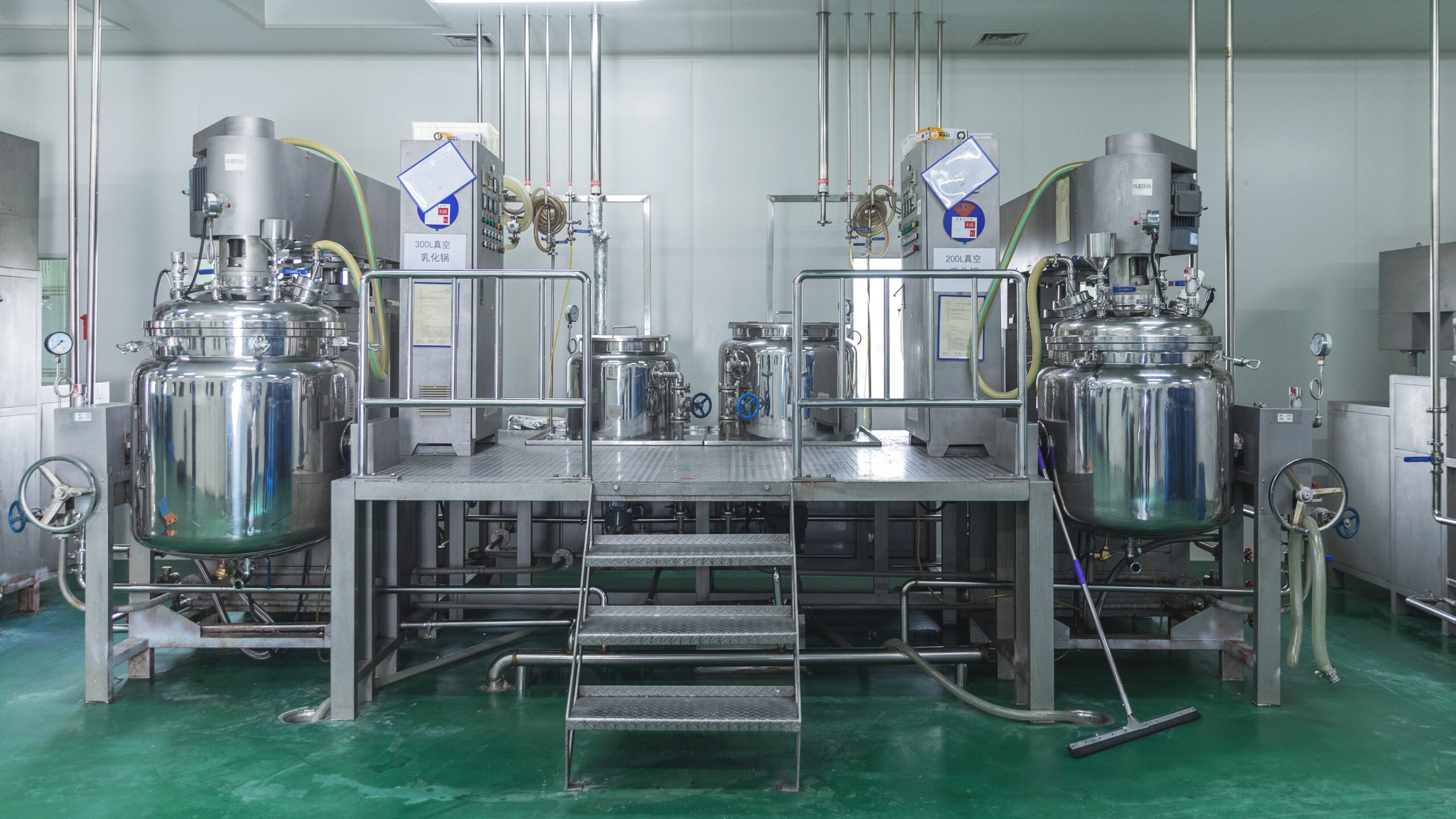
In 2005, we made a clear decision: to focus on UV adhesives in China.
At that time, China already had a developing adhesive industry. However, UV adhesives as a specialized segment were still dominated by imported brands, which meant higher cost, long lead times, and limited service responsiveness.
Our decision was not only driven by market opportunity, but also by the intrinsic value of UV adhesive technology:
Aesthetic performance: After curing, the adhesive is transparent and colorless, preserving the appearance of the bonded materials with minimal visible tracesEnvironmental friendliness: Solvent-free formulation with low VOC emissions, safer for operators and more sustainable for the environmentHigh efficiency: UV curing completes within seconds, significantly improving production speed and manufacturing efficiency
These characteristics were forward-looking at the time and remain core trends in modern manufacturing today.
We believe UV adhesives represent a long-term materials technology — one that improves production processes, enhances product quality, and contributes to environmental sustainability.
Therefore, we committed to long-term development in this field.
II. Starting from Zero: 2005–2008
In 2005, we officially entered the UV adhesive industry, and in 2007, Guangzhou Tobond Environmental Technology Co., Ltd. was established.
From the beginning, we defined a clear direction: focus on formulation R&D rather than trading-based operations.
At that time, the market was dominated by imported brands, and few domestic companies could provide stable performance and continuous supply. Our goal was clear: to achieve import substitution in key application areas.
During this stage, we faced continuous real-world challenges from customers, such as:
Glass-to-crystal bonding requiring high transparency without whitening
Glass-to-metal bonding requiring resistance to thermal cycling
Structural bonding between dissimilar materials requiring long-term reliability
These application-driven requirements became the foundation of our early R&D system.
By 2008, we had developed mature solutions for glass-to-metal and glass-to-crystal bonding systems and achieved scalable validation in real production environments.
In the same year, we successfully developed UV adhesives for plastics, expanding applications to plastic-to-metal and plastic-to-glass bonding systems.
III. Entering the Electronics Sector: Post-2008
With the rapid growth of the consumer electronics industry, UV adhesives began to move into more precise and demanding applications.
We gradually expanded into electronic manufacturing fields, including:
Structural bonding for mobile phone keypads, voice coil and diaphragm fixation, flexible cable assembly, solder joint protection, optical lens assembly, touchscreen and LCD module bonding, optical fiber assembly, and semiconductor-related processes.
As application complexity increased, product requirements evolved toward higher precision, stronger reliability, and more complex processing conditions.
From structural materials to precision electronic components, we continuously upgraded our product systems based on real manufacturing needs.
IV. Technology Driven by Application Needs: 2015–2018
In 2015, we identified a critical issue in production environments: certain UV adhesive areas were blocked from UV exposure, leading to incomplete curing.
This challenge could not be solved through product grade adjustments alone. It required a fundamental improvement in curing mechanisms.
Based on this, over the following two years, we developed:
UV–thermal dual-cure systems
UV–moisture dual-cure systems
These technologies enable secondary curing in areas where UV light cannot reach, significantly improving reliability in complex structural assemblies.
This was not a laboratory concept, but an engineering solution derived directly from real production challenges.
By 2017, we had built systematic expertise in multi-cure systems and cationic dark curing technologies, and obtained multiple utility model patents.
In 2018, the company was certified as a National High-Tech Enterprise, marking official recognition of our R&D capability and technological strength. We were again recognized in 2022.
V. Steady Development: 2023–2026
In 2023, Foshan Tobond New Material Technology Co., Ltd. was established, and the company obtained ISO 9001 quality management system certification and standardized production safety certification.
In 2025, we achieved key breakthroughs in UV adhesive applications for optical fiber devices and semiconductor chip bonding processes.
In 2026, optical communication-grade UV adhesives for fiber applications were officially launched, marking a further step into high-end precision optical materials.
These products require extremely strict control over refractive index matching, optical transparency, and long-term environmental stability. Their successful development demonstrates our growing capability in precision optical applications.
VI. Today and the Future
Today, the company holds multiple utility model patents. Our products are exported to many countries and regions and are widely used in electronics manufacturing, home appliances, communications, automotive, and precision industrial sectors.
With the rapid development of robotics, AI, semiconductors, and advanced chip technologies, the demand for UV adhesives continues to grow, with increasingly higher requirements for precision and performance.
Some challenges are already within our capabilities; others are under active development.
Future Outlook
We will continue to focus on UV adhesive formulation innovation and application-driven development, aiming to become a globally recognized technical leader in the UV materials industry.